AJ and Scooter on the beach 2014


We met our friends, Denise and Mike in the dog-friendly city of Carmel, California. They brought their dogs, Amber Joy and Scooter T. Rocketboy. At the beach, yorkshire terrier Amber actually grinned as she romped, kicking up sand and flying, wind whipping her ears and fur.  

With childlike wonder, she seemed to ask, “What IS this stuff under my paws?” She’d look back at us once in awhile, as if to say, “This place is SO much fun!”

A mild-mannered havanese, Scooter took the experience in stride, following Amber, but staying closer to Mom Denise, for protection from this unusual setting.

It reminds me we need to write with Amber’s mood if we want our readers to experience that elation. Need your readers to experience a character’s frustration? Sadness? Fear? Your word choices and details will transport them into the scene.

How?

Slow down the moments with sensory details and reactions.  Choose words which show the mood.

 Writing Prompts: 

  1. Create a scene at various settings: the beach, a forest, your backyard. Write a detail for every sense you experience. Show, through dialogue, thoughts, and actions, how your character feels in the setting.
  2. Change the feeling in the scenes above. If the scene in the backyard shows you’re ecstatic, write a new one with details which show fear. Your choice of details and descriptions will change with this mood you convey.
  3. You’ve just met a Martian who is new to our planet. Have the Martian experience objects and people in a setting. How can he/she misinterpret ideas? Show the character’s ignorance and perhaps create humor? Show how his world is different from ours?




“A man’s reputation is what other people think
of him; his character is what he really is.”

~ Jack Miner

Reputation vs. character. How can they differ? Perhaps the story behind the reputation differs from who your character is.

In the television show Burn Notice, Michael, the protagonist, is a spy who discovers he’s been removed, “burned,” from the CIA. Cut off from financial resources, a web of support and contacts, he has unseen enemies within the organization and outside of it. As he works on private cases, attempting to untangle the mystery and get back into his old job, his goal is helping innocent people while earning a living.

Through it all, his encounters with government agents allude to his past: he’s a ruthless killer. Is Michael’s character, as we know him, different than his past? What’s the story behind the story? Was he set up to be the fall guy?

As the story behind the story is revealed, suspense with the audience, or with a book, the reader, grows.

Writing Prompts:

Create a character who acts one way while shields his true self.

  1. Take your protagonists and put her/him into a situation where reputation, beyond control, is cast in a negative light. What is the story behind the story which casts the character differently?
  2. Now write the opposite. An antagonist takes credit for everything good, while acts deviously behind the scenes.
  3. In the photo below, write what happens when this dog’s family arrives home. Next, write the story behind the story. How can the pooch’s reputation differ from his true character?liz photo


At 3:20 this morning, my husband, Bob and I awoke as our bed rocked; mirrored closet doors shook with a rumble.  Living with earthquakes, we rate them mentally.  To me this one felt like a 6, but who knows where it was centered?   If it was far away, it could have been larger.

A few hours later we learned the truth.  Centered in American Canyon, not far from Napa, California, there have been ninety injuries, with three people in critical condition.  As we pray for the victims and their families, and express thankfulness it wasn’t worse, we in earthquake country receive flashbacks.

In the Northridge Quake  of ’94, we were asleep in a Southern California hotel room.  Nearly thrown from our bed, we checked on our son who slept in the adjoining living area.  Although we were all fine,  our friends, Denise and Mike had  damages.  Their Yorkie, Molly, usually slept at the foot of their bed but Molly bolted out her doggie door. She escaped just before their  television landed where she would have been.  Dresser drawers shot across the room. Their fish tank crashed to the floor, leaving their fish as casualties. $20,000 worth of damage.

Northridge Quake freeway


Twenty-five years ago, the Loma Prieta struck here in Northern California when the San Andreas Fault erupted.  Centered in the Santa Cruz Mountains, with a magnitude of 6.9, Santa Cruz, San Francisco, and Oakland experienced the most destruction.

Again, we were most fortunate, my husband just having driven off the Bay Bridge before a section of it broke.  Our son, aged four, played a computer game and stood in front of my file cabinets.  As the ceiling lights swayed, Tofer said, “What’s happening?”

“Earthquake!  RUN!”  I shouted.

He ran up the stairs, with me in pursuit.  Upon reaching the family room, I grabbed my Yorkie and out we zoomed.  silence greeted us.  Even the birds stopped chirping.   Once back inside, one of my file cabinets had toppled over – – right where Tofer had stood.  I tried to upright the heavy drawers, but nothing budged.

Both Molly and Tofer were saved by their actions.  But . . . could they have been helped by unseen guidance?  Then and now, there are many grateful people.   And many who live with tragedy or trauma.  Our prayers go out to them.

Writing Prompts:

1.  Have you ever lived through a traumatic event or natural disaster?  Write this as an essay, poem, or short story.

2.  Experienced a close call?  Narrow miss of death or calamity?  Use this to inspire your creativity.

3.  Write about  one of these themes:  thankfulness, serendipity, spirituality.

Several years ago, when my ninety-year-old dad was alive, he asked me, “Elizabeth, what’s it like to have a headache?”

He had to be kidding.

“So Dad, you’ve never had a headache?”

“Never,” he said.

After I picked myself off of the floor, I explained the sensations of headaches – – throbbing, “sickishness,” sharp shooting pains – – and then I told him about migraines. Multiply the former headache sensations by 100, add nausea and dizziness and you’ve got one.    

Recently, when I heard of Maori healers’ therapeutic powers and that they’d be in my area, I made an appointment.

As a healer gazed down at me lying on the massage table, she probed my torso with her hands. “You’ve had pelvic trauma.”

“Really? Do you mean the C-section I had years ago?”

 “Earlier than that,” she said. “You had it when you were very young.”

 What could she be talking about?

 “An operation for a hernia when I was two?” I said.

 “Ah, yes. That would do it.”

 “Do what?”

 “Damage is felt in your neck and head.”

 While I lay on a bodywork table, she sang a Maori prayer while placing her hands on me. At least I assume it was a prayer. Perhaps it was a catchy Travel to New Zealand jingle?

 Then she got to work. She exerted so much pressure with her hands on my torso I thought I’d end up in China.

 “Is it supposed to hurt this much?” I asked her between gasps.  

 “Yes,” she said. “Breathe and you’ll feel better.”

 How could I since my internal organs were now in my lungs?

 At least it wasn’t a headache. In fact, my headache had gone. Was it was pain transference?

“Let go,” she advised.

 I obeyed, willing my body to relax and breathe. Closing my eyes, I discovered the pressure soon alleviated. 

Maybe I was getting used to living in China?

“Elizabeth,” said the healer.

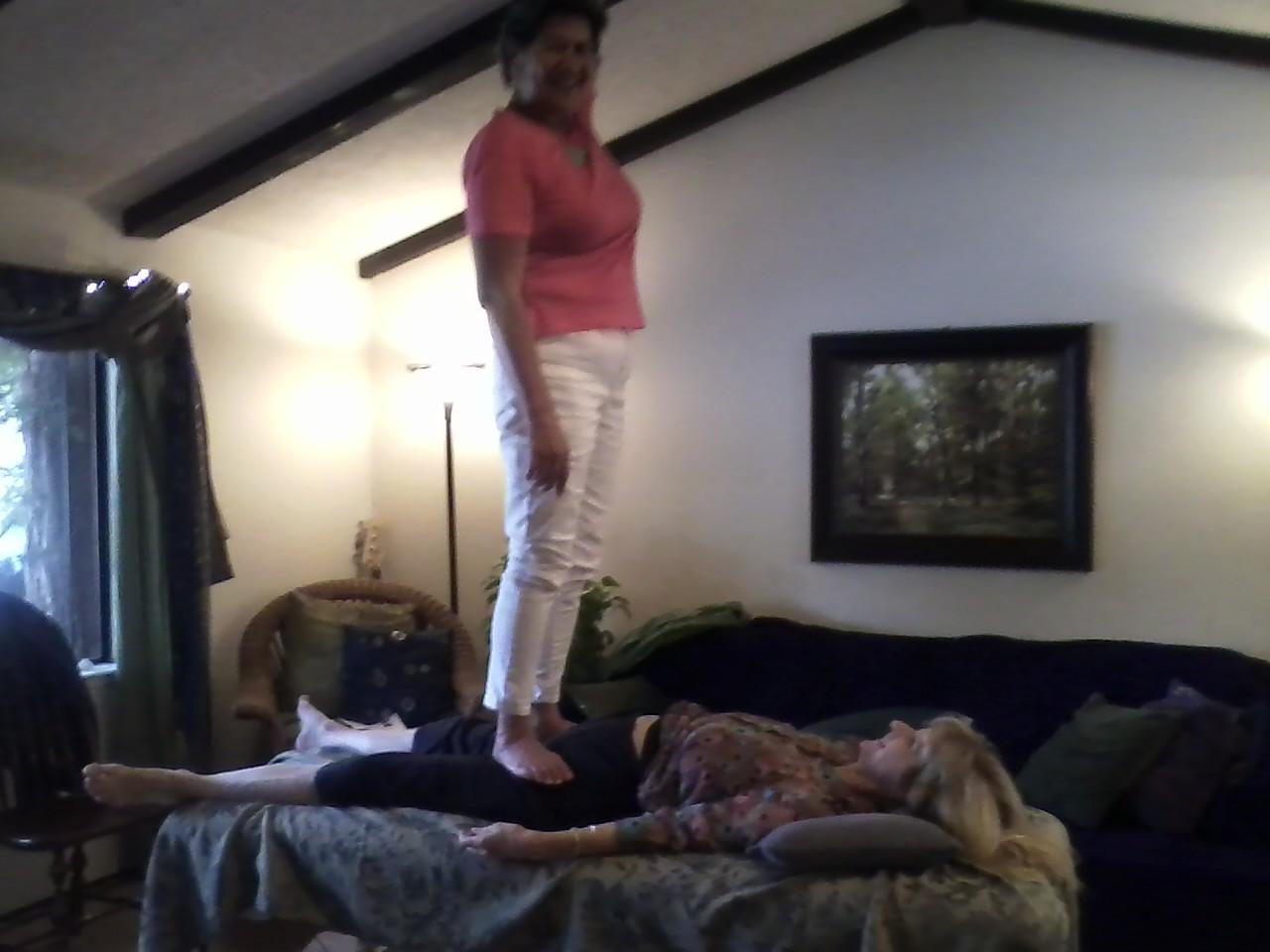
 I opened my eyes.  Legs.  I followed the legs up . . . up . . . and saw her standing on top of me, touching the ceiling with a hand for balance.

“I don’t believe this,” I said.

An immense male Maori healer standing nearby said, “Get down and I’ll get up there.”

“She’d never let you,” said my healer.

After all, China wasn’t built in a day.

 Maori Healer 72014

Writing Prompts:

  1. During your writing, we should also let go. Too often our left brain’s structured thinking destroys or inhibits our creativity. Meditate before you begin your writing session to open up all of your possibilities.
  2. As you brainstorm possible ideas, whether they are plot prospects, character traits, or article ideas, don’t take your first one. Keep going until you know, within your intuition, it’s the right one.
  3. Got a plot problem? Stuck inside a scene? No metaphors to create theme? Keep paper and pen everywhere so you’re ready when your subconscious is.

⨪⨪⨪

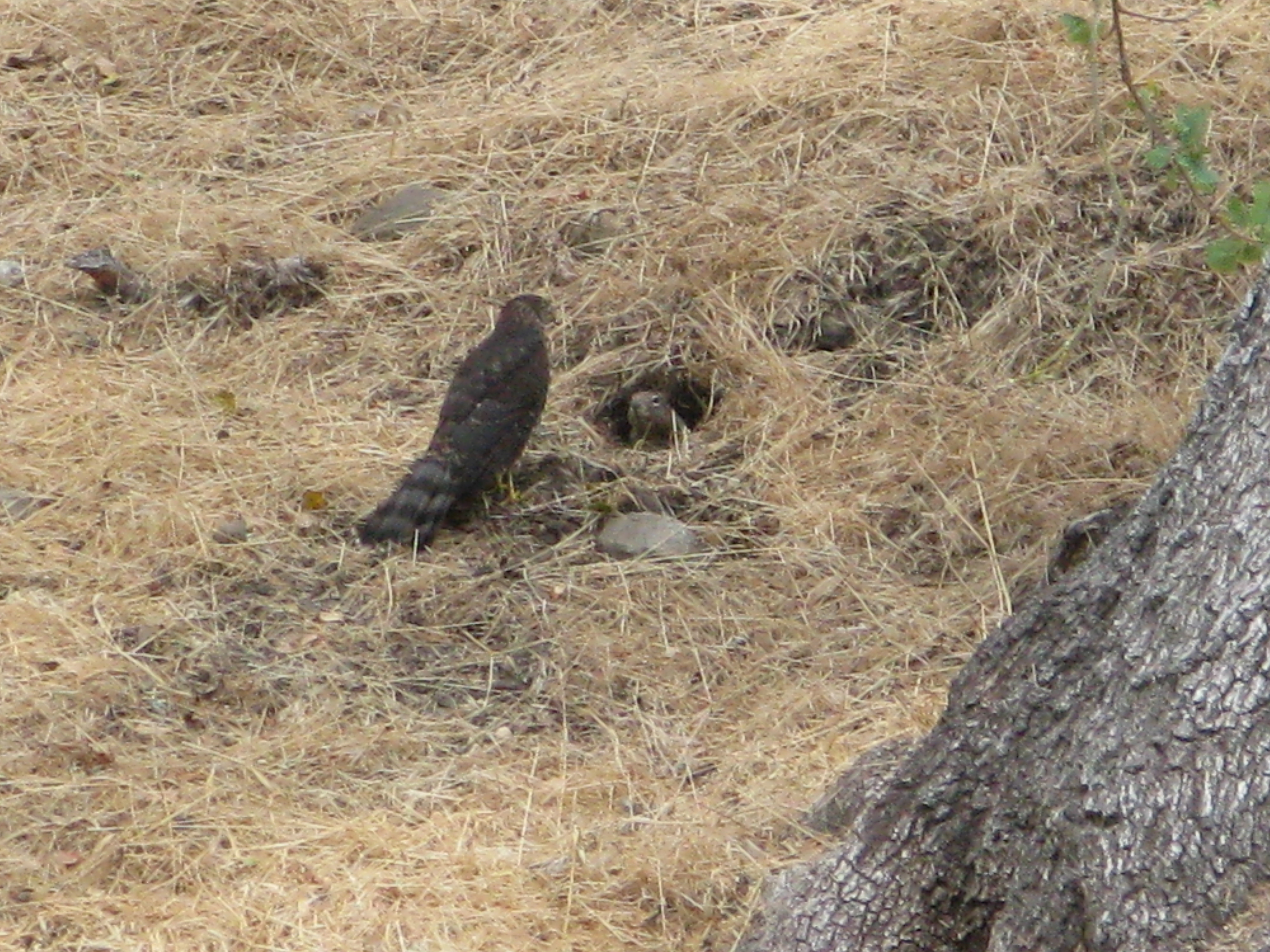
Hawk Vs. SquirrelConflict in nature, as shown by this hawk and squirrel behind our house, keeps life dangerous, emotionally driven and exciting. The squirrel hid inside his hole, but used the element of surprise to his advantage.

The hawk waited . . . . waited . . . and . . .

Pop!

The squirrel’s head burst out of his hole!  The hawk jumped backwards.

Yes, if we had captured a video of this, people would laugh.

Isn’t this what we desire of a good book? Capture readers emotionally, add an element of danger and surprise to create an exciting and humorous story.

 Writing Prompts:

  1. Where in your current writing project or art can you add the element of surprise for humor or shock value . . . or both? Remember, it’s all in the timing. Wait, wait, and boom!
  2. How can you engage your readers emotionally? Build your character’s needs and desires so they are real. Empathy for your squirrel increases the impact.
  3. Develop your antagonist so we see more than a cardboard evil character. What are her needs and desires? Why does this character act the way she does? Add this depth for a well-rounded story.


Where can we find the tastiest shrimp in the United States?  Why, in Louisiana!  The seafood melted in our mouths, sauces made us swoon, and restaurant menus enticed us to loosen our belts.  On a recent trip, my husband and I along with our friends, Paula and Jerry, traveled to New Orleans and Lafayette, LA, Vicksburg, MS, and Little Rock, AR. 

The live Cajun bands in Louisiana, set our bodies to boogey-ing! 

Mississippi’s National History Site of Vicksburg and the gunboat U.S.S. Cairo, sunk in 1862 and raised in 1964, brings the Civil War battles here to life.    

Little Rock Central High School National Historic Site Visitors’ Center created an emotionally packed step-back-in-time experience.  In the fall of 1957, nine courageous African-American students attempted to de-segregate the all-white high school.  What followed is highlighted at this center, with videos of interviews and conversations with all nine students and several white students who interacted with them.   President Clinton’s Library took most of a day, and if we had time we could have stayed longer.  Not a dull moment in either place. 

The people we met were among the friendliest, ever.  But many had no desire to ever step foot out of their favorite place:  wherever they lived.  Returning home, I discovered lots of people from various parts of our country have no urge to visit the south. 

Yes, we may love where we live best of all.  But turn down a trip to somewhere we’ve never been before? 

Do we have preconceived thoughts and images?  Discover by travel, real life experiences which can never be taught, shown, or explained.

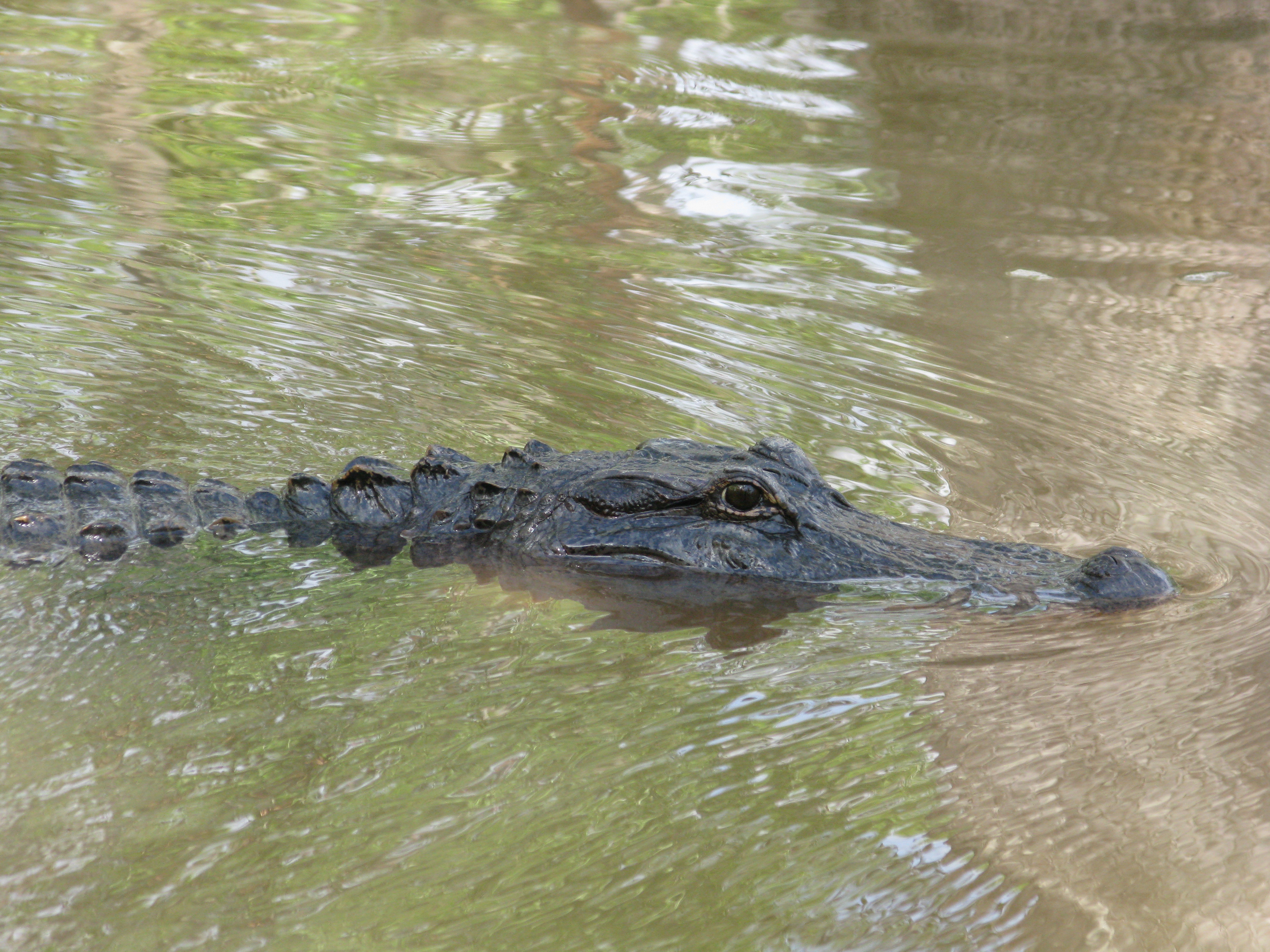
And now, with my love of animals of any kind, I’ll share a photo of this fine fellow, who greeted us on a swamp tour.

My Louisiana Buddy

Keep your eyes peeled on all of your journeys.  Take a dip now and then, into unfamiliar territories.   You’ll broaden your life, your writing, and your art. 

Writing Prompts:

1.  With any trip, whether near or far, carry a notebook or device in which to jot down the details, sensory images, and thoughts.  Let your mind wander to soak up the surroundings.  This will spark so many ideas, you’ll need a lifetime to carry out your creative projects.  Don’t you feel terrific when you have too many ideas?

2.  Write down anecdotes.  Who did you encounter?  What happened?  Who said what?   You can develop this into a personal experience essay, part of a memoir, or even fodder for novel scenes. 

3.  Interested in writing for a magazine on your trips?  Propose an article before you arrive!  The editor’s specific needs will help you jot down your notes.  And the money from the assignment may pay your way.

4.  Your photos will help you bring back the moment to you.  Take more than you’ll need.  Not only do they serve as inspiration, but you may sell them with your article, too. 

5.  Finally, enjoy your trip.  Sometimes you have to set down your pen and notebook or device and LIVE! 


depositphotos_35390419-Firefighter-climb-on-fire-stairs

Writing to Save the Day

Why do you write?  For publication?  Money?  Fun?  Passion?  Many of us answer yes to all of those choices, but beneath it all, writing deeply nurtures our souls.  Here’s what Henri Nouwen had to say about it:

“Writing can be a true spiritual discipline. Writing can help us to concentrate, to get in touch with the deeper stirrings of our hearts, to clarify our minds, to process confusing emotions, to reflect on our experiences, to give artistic expression to what we are living, and to store significant events in our memories. Writing can also be good for others who might read what we write.

Quite often a difficult, painful, or frustrating day can be “redeemed” by writing about it. By writing we can claim what we have lived and thus integrate it more fully into our journeys. Then writing can become lifesaving for us and sometimes for others too.”

http://r20.rs6.net/tn.jsp?f=001BFR_K0CnV7MZvCLpD5Zpl_epmqwZgLwDD1pgqLLXK8ImMGUPggPkQbmCio8hSvYHWIFW3eZvQbqZWw8FT7R8UEForbUkuhMRu6HX0Eb5-qLzEIeThCDpYmD1mNz0f_BgyVVk4sbevXRDV_55Ord-0X_HiTIYxReKLPh2HO88tS86S1pQYRpfZw==&c=oDM9Fdewfj6KqrigmnWh8zJBcD1U8eCvbpe0XNEAaoUgqay5S20cgg==&ch=krOw2pbg9BCFKzUkPx641zAvEjh3umfRdjjqmtgYqo26bK6KbVS2yw==  

From the Henri Nouwen Society

Writing Prompts:

1.  When was there a time you considered writing your lifesaver?  What served as a catalyst for this feeling?  Share your emotions  through an essay or poem.

2.  Write a pro-writing essay.  Your goal?  Encourage others to write!

3.  Often our most emotional experiences offer the deepest writing subjects, as  we have lived those moments or can imagine how others may feel.   Peruse a photo album from your past.  Write an emotionally deep story using a photo as inspiration. 

4.  When were you embarrassed at the time, but later laughed about your encounter?  Humor is based on these moments.  Write a story, script, poem, or song on a funny conflict or problem in your life.   Revise by reading it aloud for comic timing.

http://www.youtube.com/watch?v=xXAy_QU5WE8 

According to the Humane Society of the United States, pet ownership has grown dramatically since the 1970s.  Three times as many homes have pets today than forty years ago.  With the proliferation of pets in our lives, owners spend big bucks taking care of them.  Americans spent more than $50 billion on them in 2012, claim the American Pet Products Association. 

Which is why books, stories and articles about dogs and cats sell well. 

Author Bennett Cerf once said, “If writers want the sure road to success, for heaven’s sake, write something that will make people laugh.”

Combine sought-after humor with pets  and imagine the popularity! Humor’s basic premisses are contrast and surprise.  Placing two unlike things together create a funny juxtaposition. Employing the idea of opposites — two unlike characters interacting, laughs abound. 

Writing Prompts:

1.  Watch the video and let it inspire you to write about these animals together.  Write a scene from the dog’s point of view and then the cat’s.  Next, get into the owner’s head.   

2.  Write an announcer’s narration for this video.

3.  Choose another method of creativity to communicate the result of your #1 writing prompt. 

4.  If you’re a pet owner, pick up your camera and discover humorous moments with your animals.  Allow them to excite  you to for creating other works of art.

High Schoolers Study
 
 
2014 Voices of Lincoln Poetry Contest    
 
Deadline:  July 26, 2014
For International artists’ 10th Annual Voices of Lincoln Poetry Contest — Enter Now!
 
 As part of the celebration of National Poetry Month,  the contest presents five new categories: “Once Upon A Time,” “Ten Years From Now,” “It’s A Miracle,” “A Journey Worth Taking” and “People Are Funny.” 
Poets may submit a maximum of three poems, no more than one in each of three of the five contest categories. Poems may be in rhyme, free verse, Haiku or other accepted poetry forms and of any length, up to a maximum of 60 lines.Everyone is encouraged to enter the contest.  Poets do not have to live in Lincoln, CA to be eligible. Young Poets, 18-years of age or under, are encouraged to submit poems and will compete in a special “Young Poets” category.Entry Forms and Contest Rules are can be downloaded from www.libraryatlincoln.org

Entry Forms must be received no later than Saturday, July 26, 2014.  Early submissions are appreciated.

Winners will read their poems on Sunday, October 12, 2014 at the Voices of Lincoln event to be held from 3:00 to 5:00 p.m. in the Willow Room at the Lincoln Public Library at Twelve Bridges, 485 Twelve Bridges Drive, Lincoln, CA.  Winners also will be presented with a commemorative chapbook of the winning poems.

Last year, one hundred thirty-three (133) poets submitted 272 poems. We had 56 entrants submit 81 poems in the “Young Poets” category. The 2013 contest had entries from 34 California cities and 10 out-of-state cities from eight (8) states. In addition, the Voices of Lincoln Poetry Contest went international again last year. One entry came from Rockhampton, Queensland, Australia. 

The Voices of Lincoln Poetry Contest is presented by the Poets Club of Lincoln and is sponsored by the Lincoln Library and the Friends of the Lincoln Library.

Deadline: 07-26-2014
Poets Club of Lincoln
Lincoln, CA

Contact: Alan Lowe, Contest Coordinator
email: [email protected]
Phone: 916.408.1274
Website: www.libraryatlincoln.org

___________________________________

California Writers Club Young Writers Contest: 

I will post first, second and third place winners on this blog after they have been contacted personally.  (Process has begun!  Judging is complete!)  Fabulous entries from all over Contra Costa. 

9164310-image-of-two-microphones-on-background-of-people-listening-to-lecture-at-conference

How can you write a scene with emotional impact, reader involvement, and suspense? 

Author Jordan Rosenfeld spoke to the California Writers Club, Mt. Diablo Branch and shared valuable tips for writers of all genres.  

 With every scene you create, ask yourself, what is the point of the scene?  Does it move your story forward, or is it just a block of setting description?  In showing setting, make your character interact with her surroundings

Great advice!  I critiqued manuscripts at one conference where a writer created a lovely Victorian Christmas which dominated the first chapter.  I suggested she weave in the setting elements as the character acted and reacted, foreshadowing the mystery ahead. 

She said, “Great idea!  But this house doesn’t play a role in the rest of my story at all.”  So why include it?  Once she began writing with her plot and character in mind, her character acted, reacted, and experienced the setting through sensory images.  It wasn’t overblown this time, and she created a reason for her scene to be there: she introduced characters and hinted at the mystery coming.

Rosenfeld advised writers create tension through emotional complexity.  Characters can experience more than one feeling at a time.  The uncertainty can be showed through their thoughts and dialogue, the writer’s word choice, how a word sounds, and imagery

For more information, read her book, Make Scenes, published through Writer’s Digest, and visit her website:  www.jordanrosenfeld.net  

Writing Prompts:

  1. It’s your turn!  Create a scene by involving your character in the setting shown through the elements above.  Make sure your scene moves the story’s plot forward.  Ask yourself:  Why must it be here?
  2. Tony Serra, attorney for Raymond “Shrimp Boy” Cow, at a federal court appearance said, “Law enforcement is supposed to investigate crime and criminal activity.  In this case, they created crime and criminal activity.”  (Source:  Heather Knight, San Francisco Chronicle.)  Use this quote to create a scene employing Rosenfeld’s advice. 
  3. Write an article, nonfiction piece, or essay with a scene focusing on the tips above.