This past week my cousin came from Wisconsin and we played tourist, taking her places in Northern California, including Ano Nuevo, where male elephant seals are currently moulting.  Even though there are no females around, a few of the younger seals practiced showing dominance, as showed in the photo, and with their tremendous, guttural wails.

IMG_6664 IMG_6672

Seals flipped sand onto their backs and bellies as a cooling mechanism, as it was a warm day.  One seal became a sand mound; so he wiggled out only to start sand-flipping all over again. 

Writing Prompts:

  1. Study a creature in nature.  Describe its habits, vocalizations, or body movements.  How does it relate/communicate to others?
  2. Write a poem, short story or personal experience based on this being. 
  3. Is your summer filled with day trips or longer travel?  Keep a travel journal.  Collect photos and paper souvenirs which can help recreate your experiences. 
  4. Create art or writing based on an anecdote in your journal. 

Last night my friend, H and I took BART into San Francisco to hear an author and political commentator discuss his new book.  Every seat was filled.  Two hundred people?  It was great to see many people do continue to read and think, and care enough to show up.  H and I agreed we could have stayed all night listening to this well-thought man discuss history and politics, not just media babble. 

 When it was question and answer time, he talked about the importance of getting facts correct.  How refreshing!  I’m reminded of why I don’t like watching television news much anymore, since these days rumors and name-calling are often reported before information is verified.  Who gets a story first is more important than who gets a story right.

 Afterwards, we walked city streets to a restaurant.  On Market Street, the light our way, another couple and my friend began to walk.  But a red truck made a right turn into their path . . . and kept on coming. For a moment – – everyone paused.  But no, upon checking, we did have the right away, so even I stepped off the curb, but the red truck continued. I threw out a protective hand in front of H, who would be first in the truck’s path. 

 Finally, the man at the steering wheel stopped.  Guess he didn’t want her as a hood ornament.  The man next to me laughed as we cross the street. 

“What?” I asked him. 

“Did you see his bumper sticker?” he said.

I shook my head no.

“I brake for bikes. Share the road!” he said. 

Then we all smiled at the irony. 

Guess the driver didn’t mean pedestrians.

Writing Prompts:

1.  As you watch television, note when there is news (facts which can be verified) and rumors and opinions.   If a person resorts to name-calling, look beyond the labels and seek what is behind it.  Is the person in front of the camera an entertainer or a reporter?  What is the person’s credentials?  Reputation?  Can you check the facts?  Write a piece where you need to use research.  Back up your story or article with facts.  Make sure you keep your references.

2.  Look for bits of irony and general humor in your daily life.  Jot it down when you find it.  Even sad moments can have a bit of comedy in them. How else do we survive tragedy?  Write a personal narrative, poem or story where you can include a bit of both. 

3.  Watch a movie and identify the moments of humor and sadness and how close they come together.  How much facts are in the show?  Opinions?

4.  Attend an author talk.  What does the author do well?  Remember this when it’s time for you to do your book presentation!

Thanks for sharing this amazing film.  Making music from trash found in a landfill!  There is beauty in the world . . . we just need to know where to look. 

Comment from Joanne

Writing Prompt Inspired by Joanne’s Comment:

Where do you find beauty in your world?  Write a poem, personal narrative or story about this topic.   Make it a sensory experience.

I guess reporters don’t know which column will be published when, or else the California Writers Club Young Writers Contest article and photo just didn’t make it into my edition of the Contra Costa Times on May 23.  Next time I’ll only post it here when I see it in the paper myself. 

***

As I’ve been working on a project, I’ve found myself being concerned with the marketing aspect and how the publicist would  react to the story.  After the day’s work, I closed my computer and purposely didn’t re-read my words. 

The next morning, I printed out my chapter and took a clipboard to revise and work on another scene.  Reading what I had written, my jaw dropped.  Who was this stilted writer who had composed these awkward sentences?  Do I know this person?  Where did she come from? If she was in my writing class, I’d take her aside and tell her to forget the final phases of book production, and free herself by going back to the basics.  Think about character!  Relax.  Wonder about the story, don’t let the final outcome block the writing process.

I set aside my previous day’s disaster, and started over.  This time, I let my mind wander over my characters and their world.  “No worries,”  I told myself.  “Have fun with these people.  Get to know them.  You don’t have to write the very next chapter.  Just write a scene where they talk to each other. What’s the worst problem they can get into together?  What will they do?”

Writing Prompts:

1.  What is a dramatic or interesting conflict you can have your character get into?  Can it somehow be based on her greatest fear?

2.  What emotion does your scene evoke?  What do you want your reader to feel?

3.  What is the motivation for why the characters in your scene act the way they do?

4.  Write about your characters BEFORE this scene.  What is their back story?

5.  Within your writing, can you locate where you are showing and where you are telling?  Highlight the telling.  If you have too much highlighting, where can you show in a scene rather than tell?  Or where can you cut out the telling all together?  If it doesn’t move your story forward, cut it out.

Recently a friend’s husband drove her to a meeting and returned home after fifteen minutes.  Switching on music,  he headed to the bedroom and stopped abruptly.  Their back window had been smashed; dresser drawers were strewn open, their contents spilling out.  Most of his wife’s jewelry was missing, except for a few pieces the burglars had dropped on the floor in their hasty retreat.

“I think he got home in the middle of it,” she said.  She was relieved they left her most valued sentimental necklace behind. 

Then there was the time my son was four and the floor beneath our feet began rolling.    “Earthquake!  Run!”  I yelled as I scooped up our terrier.  We flew past the swinging  light fixture and didn’t stop until we reached the middle of the cul-de-sac. 

We waited until birds chirped and squirrels chattered once again. After returning to discover overturned file cabinets, right where my son had been playing, I explained what could occur during an earthquake.  Later we discovered the extent of the Loma Prieta once we got back our electricity.  “Gee,” said Tofer, considering our house could have been demolished.  “I should have grabbed Herbie.”  (His favorite stuffed animal, which wasn’t an animal at all, but a car.)

During the disastrous Oakland fire of 1991, my friend’s sister and her family were evacuated.  She ran past her dresser, noticing a coffee mug, her jewelry box, and a photo album.  They didn’t stop running until they got to the base of their hill. That’s when she discovered she held the coffee mug in her hand. 

Writing Prompts:

1.   What was the first object that held important emotional meaning for you? Why?  How did you value it? Describe the item and show how you placed it in esteem. 

2.  Did your family have any treasured family heirlooms?  Write an essay about one’s significance.

3.  You have only a minute to grab one item to save from your home. What do you take and why? Describe it using your senses and emotions.

4.  In the writing project you are working on now, write about a meaningful object for your main character, a minor character, and even the antagonist.  Give background for each.  Why do they hold significant relevance?  Can any of them be a larger symbol?

When Zoie took me out for a walk the other day, I stopped at the curb in shock.  There, in our neighbor’s front lawn, hung a FOR SALE sign. 

No. 

It couldn’t be. 

How could they do this to our perfect little cul-de-sac?

Another neighbor and my friend, Hilde, joined us outside with her dog.  We all stared sadly at the sign.  It was as though our canine friends understood our grief.  Admittedly it wasn’t so much about losing this particular couple – after all, we hardly knew them.

But.

We’ve had a past.

Before these people lived here, a family whose kids’ police record rivaled Al Capone’s dwelled in our hood.  Okay.  So maybe I’ve exaggerated slightly.  But one kid burglarized neighbors’ homes and his parents were so belligerent and inebriated their fights were legendary – as were the holes they punched in their walls.

No, we stared at this calm, quiet house and we worried. 

Who will move here? 

“Maybe if we see motorcycles and teenagers we could all stage a noisy fight,” I said.

By this time another neighbor, Tom, had joined our worry club. 

“But they might be happy to think they’ll fit right in,” said Tom.

He’s got a point. 

“I’ll pray,” I said.

“I’ll hope,” said Tom.

“I’ll move,” muttered Hilde. 

Writing Prompts

  1. Write about a neighbor you had, good or bad.  What made this neighbor memorable? 
  2. In the writing project you are working on now, who are your character’s neighbors?  How well does your character know them?  Write a scene where they are forced to face a conflict together. 
  3. Write a scene where they are in conflict with one another. 
  4. Write a poem about neighbors. 

Book I’ve just begun reading: 

Zip Cover

Zip by Ellie Rollins, Razor Bill, an imprint of Penguin.

Book I’m going to read next:


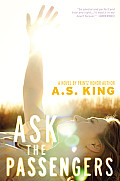
Ask The Passengers  by A.S. King, Little, Brown Books for Young Readers
 
Book I own and is next on my stack:


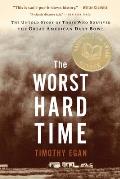
The Worst Hard Time: The Untold Story of those who Survived the Great American Dust Bowl by Timothy Egan, Puffin paperbacks.
 
I attended a local writing workshop led by Jane Vandenburgh, author of The Architecture of the Novel and she had many wise things to say.  Some of the gems: 
 
“A story can manufacture its own structure if you allow it.”
 
“Outline your book after you’ve written it.” 
(YES!  This is me now.  For those of you who aren’t into outlining your plot like I am, you don’t have to impose the structure first.)
 
“If you are writing a character driven story, remember the character must participate in the world.  Thoughts aren’t action.  Think cinematically.” 
(Many story problems occur because the main character doesn’t do anything.)
 
“You don’t have to start at the beginning.  Start at chapter seven.  Write anywhere.” 
(Lots of people don’t write their stories because they don’t know where to start.) 
 
And the best quote of all, in my opinion:  “Our characters don’t know who they are until they run into conflict.” 
 
Writing Prompts:
 
1.  Who is your character?  What is the worst thing that could happen to her/him?  Something embarrassing?  Get her/him into a jam.  How will he/she get out of it?
 
2.  Outline a story you have already written.  Have you enough conflict and tension in your story?  Did your main character solve a problem or learn/grow a bit?
 
3.  In the book you are reading now, how does the character change throughout the story?  What propels the character into action? 


The other day we attended an art exhibit from the Dutch masters.  Knowing very little about art history, we soon tagged along with a tour in session to discover the story behind the story.  It turns out one painter, Meindert Hobbema, couldn’t paint people.  In one of his lovely woodland landscapes, there were several farmers and local villagers in the scene.  So what did he do?  He contracted out.  Paid them a fee and that was the end of their services.  No credit at all. 

Reminds me of the world of ghost writing in publishing, or work-for-hire.  One example in children’s books is The Babysitter’s Club.  Although Ann Martin began the series, soon she went off and wrote her own books and other writers penned them.  They did get some credit, however.  Just check the dedication page.  That’s the author. 

Art is also similar to literature in how we read a painting.  On first glance of one shown at the museum, we saw a family seated around a table celebrating a baby’s christening with wine.  One man was lighting a very long pipe.  But to hear the story behind the story, we discover that this pious occasion wouldn’t have been a time for such inebriation. The pipe symbolized something else entirely. The adults in the picture looked like they were having way too much fun.  The woman’s clothing dipped lower than it should have, and her seating position invited more than friendliness.  Who knew?  Today we wouldn’t think twice about it.   In the corner a parrot perched.  It wasn’t merely the family pet, but a symbol.  The artist was saying the children in the picture would learn from the adults’ wild ways, or parrot by example.

Writing Prompts:

  1. Pick up a book you love and parrot or model what you admire about this writer. 
  2. Make a goal of an artist date for yourself once a month.  Or once a week if you can.  See a play or attend a writer or artist event.  Keep a journal of details that impresses you. 
  3. Choose a painting from a book, online or from an exhibit.  Without knowing anything about it, write a short story or poem to go with the art work.  
Who did this?  The answer is obvious by the reaction of the characters involved.  
 
 
Writing Prompt:
1.  Using a character’s facial expression, action, thoughts and/or dialogue, show guilt or innocence in a story or poem.
2.  Choose a character you know in your life.  Show this person or animal’s character through action, details, and/or dialogue in a personal narrative. 
3.  Write a poem showing character.  Author Jane Yolen defines poetry as “compressed emotion.”  Take out any words that aren’t absolutely necessary.

Every great movie has one or more ultimate memorable moments. A few lines of memorable dialogue:

* In “All About Eve” Betty Davis says, “Fasten your seatbelts, it’s going to be a bumpy ride.”
* In “The Wizard of Oz” Dorothy proclaims, “We’re a long way from Kansas!”
* In “The Wizard of Oz” the witch cries, “I’m melting!”

Then there are the images which stay with you forever.

*Also from “The Wizard of Oz,” the sand running through the large hourglass timer
*E.T. and friend riding their bicycle across the face of the moon
*Wile E. Coyote hanging suspended in air

Every scene, whether it is from a short story or a movie, must include four things:
Desire, Action, Conflict and Change. (Thank you, Robert McKee!) Your character desires something more than anything in the world, takes action in some some or large way, runs into someone or something creating conflict and the character changes. The change can be slight, but there must be change. At the end of the scene, to be truly memorable, it should have a punch – a line of dialogue or an action that gives it an extra oomph.

Writing prompts:

1. What is a memorable moment from a movie you have recently seen? Why do you think it is indelibly etched within your memory?
2. Learn to identify these memorable moments within movies and the books you read as well as the desire of the characters, their actions and conflicts and their changes.
3. Write a scene with a character you have created or know well. After you write your piece, identify any memorable moments within it. If you can’t find any, structure the pacing of your story and the tension so as to create them. Remember desire, action, conflict and change.
4. Write a personal narrative scene with these same elements.